
Some days, your body sends a whisper. A mild headache. A stiff shoulder. A stomach that feels “off.” Other days, it sends a clear message that you can’t ignore, such as a migraine that wipes out focus or a back spasm that makes standing up feel like a project. This common adult health issues guide covers the everyday illnesses and injuries that most adults deal with at some point, and it explains why they can legitimately derail work and daily responsibilities even when they don’t look dramatic from the outside.
Adults often try to push through discomfort because life doesn’t pause. Meetings stay on the calendar. Deadlines still exist. Bills still show up. Yet the “push through” mindset often extends recovery time, spreads contagious illness, and turns manageable problems into longer disruptions. If you’ve ever searched for an online doctor’s note because you needed a simple way to document time away, you already understand how quickly routine symptoms can become a logistics problem.
This article focuses on common issues seen across the United States. It explains symptoms you can recognize, realistic self-care steps that often help, prevention habits that actually fit real life, and the situations where medical evaluation becomes important. When you feel unsure or when your symptoms worsen, you should contact a licensed clinician for personalized guidance. If symptoms feel severe or urgent, you should seek immediate care.
Why “Everyday” Health Problems Hit Adults Hard
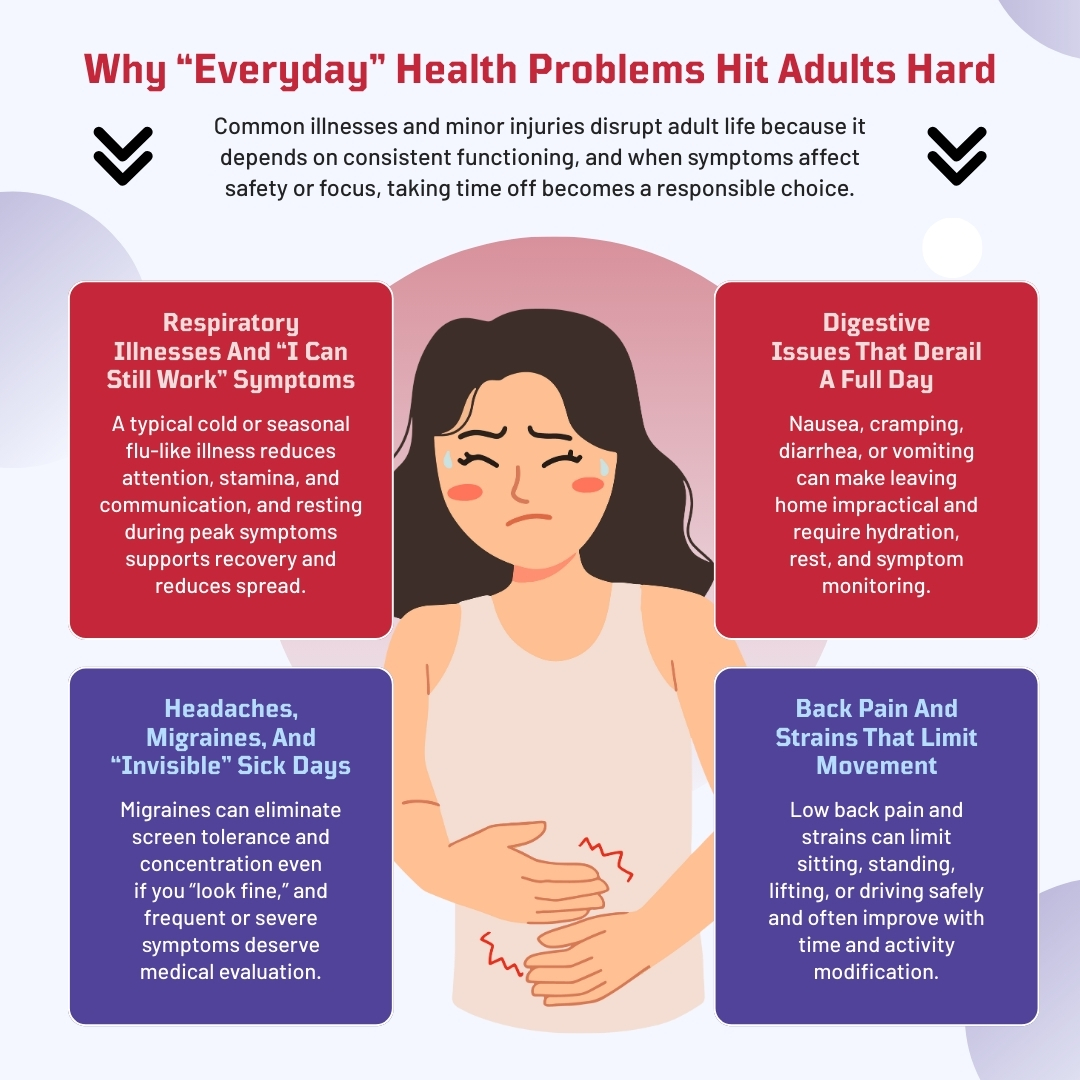
Common illnesses and minor injuries often create bigger disruptions in adulthood because adult life depends on consistent functioning. Your job may require prolonged sitting, constant typing, or heavy lifting. Your day may include commuting, caregiving, and a schedule that leaves little time for rest. When symptoms impact your ability to work safely or effectively, taking time off becomes a responsible choice, not an overreaction. Many workplaces also require documentation after a certain number of missed days, which is why people search for a doctor’s note for work even when the health issue seems straightforward.
These disruptions are also common. The CDC notes that adults in the United States average two to three colds each year. And while that statistic focuses on colds, the same reality applies across many routine conditions: being “commonly experienced” doesn’t mean “easy to function through.” People recover best when they treat symptoms early and give the body enough time to reset.
Respiratory Illnesses And “I Can Still Work” Symptoms
A typical cold often starts with congestion, a scratchy throat, sneezing, and fatigue. Most adults can still move around the house, make food, and handle basic tasks, which makes it easy to assume a full workday is possible. Yet cold symptoms can seriously reduce attention, stamina, and communication, especially when coughing disrupts speaking and meetings. If you’re trying to manage responsibilities while sick, you may find yourself needing a real doctor’s note for work to match your workplace’s absence policy, even if the illness itself doesn’t require extensive care.
The best cold strategy stays simple. You can prioritize rest, hydration, and a lighter schedule. You can also avoid “hero behavior” that spreads germs to coworkers. If symptoms worsen, fever persists, or breathing becomes difficult, you should seek medical guidance. Prevention matters, too. Handwashing, avoiding face-touching, and staying home during peak symptoms reduce the spread and shorten the chain of infection.
Seasonal flu-like illness tends to feel more intense than a cold. Body aches, fever, fatigue, and a heavy cough can make commuting and productive work unrealistic. Many adults need a recovery window that lasts several days, and fatigue can linger even after the fever improves. When work policies require formal documentation for absence duration, people often look for a doctor’s note online for work because they want to keep things clear and compliant while they recover at home.
Digestive Issues That Derail A Full Day
Digestive disturbances can appear quickly and change everything. Nausea, cramping, diarrhea, or vomiting can make leaving home impractical and often make working in a shared environment inappropriate. Norovirus is a major contributor to these “sudden” stomach illness days. Research published in a peer-reviewed NIH source estimated that norovirus causes 19–21 million illnesses per year in the United States. When symptoms hit, people frequently search online options because they want documentation without adding unnecessary strain to an already exhausting day.
Most short-term stomach illness recovery depends on hydration and rest. You can focus on frequent sips of water or oral rehydration solutions and small, bland meals when tolerated. You should seek medical evaluation if you experience signs of dehydration, severe abdominal pain, blood in stool, or symptoms that don’t improve. Prevention remains basic but powerful: careful hand hygiene and safer food handling reduce risk.

Headaches, Migraines, And “Invisible” Sick Days
Not every disabling symptom shows up visibly. Migraines can wipe out your ability to work, even if you “look fine” sitting still. Light sensitivity, nausea, and pounding head pain can make screens and noise unbearable. The American Migraine Foundation states that 39 million Americans live with migraine. During severe episodes, adults sometimes need time away and may look for an online sick note for work so they can rest without additional administrative stress.
Migraine management depends on recognizing patterns and triggers. You can track sleep changes, skipped meals, hydration, stress levels, and screen exposure. You can also take symptoms seriously early rather than waiting until pain peaks. If headaches become frequent, unusually severe, or come with neurologic symptoms like weakness or confusion, you should seek medical evaluation.
Learn how to tell when recurring migraines indicate something more serious in our dedicated blog on the topic: Recurring Migraines and Headaches: When to Seek Professional Help
Back Pain And Strains That Limit Movement
Back pain sits near the top of the “this just ruined my week” list for adults. It can happen after lifting something minor, sitting too long, or moving awkwardly. A widely cited NIH/NCBI review notes that up to 80% of people experience low back pain at some point in their lives. When pain limits your ability to sit, stand, or drive safely, missing work becomes sensible. Many people end up needing a doctor’s note for work online because work policies don’t always distinguish between “minor” and “nonfunctional.”

Most uncomplicated back strains improve with time, activity modification, gentle movement, and a recovery-focused routine. You should seek evaluation if pain follows a significant fall, including numbness or weakness, or worsens steadily. Prevention often comes down to ergonomics and movement breaks. A better chair and a five-minute walk every hour can do more than people expect.
Joint Pain, Overuse Issues, And Repetitive Strain
Adults often develop joint pain through repetition rather than accidents. Wrists can hurt from constant typing. Knees can ache after sudden increases in activity. Shoulders can tighten from poor posture. These issues may not look serious, but they can directly impact work output, especially in jobs involving lifting, driving, or detailed handwork. When pain limits function, some adults look for an online doctor’s note for work to document recovery time while they reduce strain.
Overuse recovery improves when you stop aggravating the joint early. You can alternate tasks, reduce repetitive motion, and use supportive ergonomics. If pain persists, swelling appears, or joint stability changes, you should seek medical evaluation. Prevention focuses on pacing and strength-building rather than intensity spikes.
Learn more about sprains and strains in our dedicated blog on the topic: Sprains, Strains, and Minor Injuries: How to Know When to See a Doctor.

Skin Issues That Affect Comfort And Concentration
Skin problems can absolutely sideline adults, especially when they involve itching, burning, or pain that disrupts sleep and focus. Contact dermatitis, eczema flares, and allergic reactions often worsen with stress, friction, or irritant exposure. Even mild cases can become a major distraction in public-facing jobs. When symptoms interfere with work or sleep, people may seek a doctor’s note for work online to support a short absence while the flare calms down.
Skin issues often improve when you identify triggers and reduce exposure. You can also prioritize gentle cleansing and consistent moisturization. You should seek evaluation if you notice spreading redness, fever, rapid swelling, or signs of infection. Prevention starts with knowing your irritants and treating early irritation before it escalates.
Learn how to tell when a skin rash is more than an allergic reaction in our dedicated blog on the topic: Skin Rashes and Irritations: When It’s More Than Just an Allergy.
Minor Injuries That Still Prevent Work
Minor injuries don’t always feel minor when they affect function. A wrist strain can stop you from typing. A sprained ankle can make commuting unsafe. A bruised rib can make lifting or deep breathing painful. These issues rarely require hospital care, but they often require real rest. When employers request documentation for missed time, people may search for a doctor’s excuse online because the need is practical: confirm the absence, then heal.
Recovery improves when you avoid re-injury. You can rest, adjust activity, and let inflammation settle rather than testing pain repeatedly. If swelling increases, pain becomes severe, or movement changes dramatically, you should seek medical evaluation. Prevention comes down to pacing, proper footwear, and being realistic about body limits on high-demand days.
The “Too Sick To Focus” Category
Some issues don’t fit neatly into one diagnosis but still ruin work performance. Severe fatigue, sinus pressure, body aches, or a lingering cough can make thinking and communicating harder than people admit. Adults often underestimate how much productivity drops when the body is fighting an illness. If you’ve ever felt guilty for staying home, you’re not alone. This is why many people search for doctor’s notes online: they want clarity and coverage without turning recovery into a second job.
You can treat focus loss as a real signal. When your body asks for rest, you can often shorten recovery by listening early. If symptoms escalate or last longer than expected, you should seek evaluation. Prevention includes sleep consistency and not returning to a full schedule immediately after symptoms first improve.
When Medical Evaluation Matters
Most everyday issues improve with rest and time, but some symptoms deserve quicker evaluation. You should take persistent high fever, worsening pain, breathing difficulty, severe dehydration, or new neurologic symptoms seriously. You should also seek medical guidance when symptoms don’t follow a typical improvement pattern. People sometimes look for a legit doctor’s note online because they want to handle documentation correctly, but health decisions still come first.
A useful mindset is to watch the trajectory. If symptoms steadily improve, home recovery may make sense. If symptoms worsen, shift suddenly, or become severe, evaluation becomes more important. You don’t need to panic, but you should respect the signals.
Prevention That Fits Adult Life
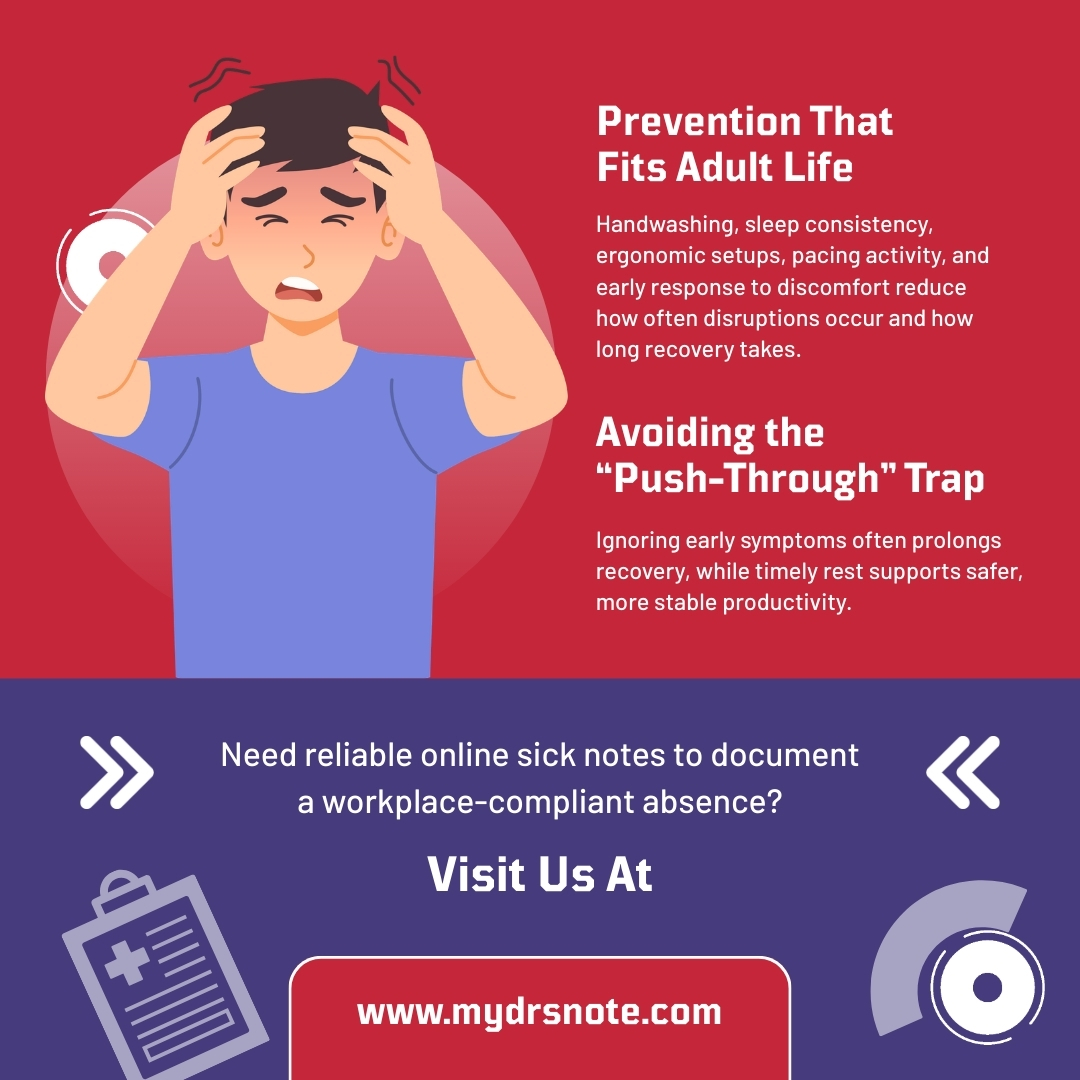
Prevention does not require a perfect routine, a strict wellness regimen, or unrealistic discipline. For most adults, effective prevention comes from small, repeatable habits that fit into everyday life rather than overhauling it. Washing hands consistently, staying home when contagious, using ergonomic work setups, taking movement breaks, and prioritizing sleep form the foundation of realistic illness and injury prevention. These habits do not eliminate health disruptions entirely, but they meaningfully reduce how often they occur and how long recovery takes when they do.
Preventing physical injury also depends on pacing rather than intensity. Warming up before activity, easing into new exercise routines, and wearing supportive footwear reduce strain on joints and soft tissue. Many adult injuries occur not during extreme activity but during routine tasks performed while tired or distracted. Treating recovery as part of performance rather than a pause from it often keeps minor issues from turning into multi-week setbacks.
Prevention also includes knowing when not to push. Adults often ignore early discomfort because it feels manageable, but that discomfort frequently signals the need for adjustment. A sore wrist after a long day of typing, a tight back after hours of sitting, or fatigue after consecutive late nights all represent opportunities to intervene early. Addressing these signals promptly often prevents more serious disruption later.

Sleep deserves special attention in prevention discussions because it influences nearly every system in the body. Inconsistent sleep increases susceptibility to illness, slows injury recovery, and worsens pain perception. Adults who protect sleep time often experience fewer health interruptions overall. While sleep may feel negotiable during busy weeks, it often determines whether the body recovers efficiently or struggles longer than necessary.
Stress management also plays a role in prevention. Chronic stress weakens the immune response, increases muscle tension, and worsens headaches and digestive symptoms. Simple strategies such as regular breaks, realistic scheduling, and reducing unnecessary pressure can meaningfully reduce health disruptions. Prevention does not mean avoiding stress entirely. It means managing it in ways that allow the body to recover.
Documentation and Real-World Work Policies
Workplace policies vary widely, and that inconsistency creates confusion for many adults navigating health-related absences. Some employers require documentation after two missed days. Others require it after three. Some track patterns of absences across a quarter or a year. These policies exist to maintain clarity and fairness, not to question legitimate health needs.
Documentation helps keep communication clear without requiring employees to disclose private medical details. That is why people search for a legit doctor’s note online even when they understand their symptoms well and simply need a formal way to confirm they took time to recover. The need for documentation often reflects policy compliance rather than medical uncertainty.
It is important to understand that documentation is not medical treatment and should never be framed as such. Documentation does not diagnose illness, prescribe care, or replace evaluation. It simply records that time away from work was medically appropriate. When used correctly, documentation supports transparency, reduces misunderstandings, and allows people to return to work without unresolved administrative stress.
Many adults delay taking time off because they worry about how absences will be perceived. Clear documentation can remove that anxiety by providing a neutral record that aligns with workplace requirements. This clarity benefits both employees and employers by reducing speculation and unnecessary back-and-forth communication.
Work policies often lag behind modern work realities, especially in remote or hybrid environments. Some employers accept digital documentation, while others still prefer printed records. Because expectations differ, employees often feel unsure about what will be accepted. Clear, straightforward documentation helps adults navigate these requirements without confusion or frustration.
Documentation also plays a role in longer recovery periods. When health issues extend beyond a day or two, having appropriate records in place can prevent complications with payroll, scheduling, or leave tracking. This administrative support allows individuals to focus on recovery rather than paperwork.
Avoiding the “Push-Through” Trap
Many adults grow up internalizing the idea that working through discomfort signals professionalism. Calling in sick can feel like a failure of discipline, especially when symptoms seem manageable on the surface. A mild headache, lingering cough, stiff back, or heavy fatigue often does not look serious enough to justify stepping away. Yet these are the very situations where pushing through tends to cause more harm than good.
When adults ignore early symptoms, the body often compensates briefly and then demands attention later. Concentration drops, reaction times slow, and simple tasks require more effort than usual. Mistakes become more likely, particularly in roles that require sustained focus, decision-making, or physical coordination. Over time, what could have resolved with short rest stretches into longer recovery. This pattern plays out repeatedly across everyday health issues, from migraines to muscle strain to seasonal illness.
The problem is not dedication. The problem is misjudging how recovery works. The body does not heal efficiently under constant strain. Fatigue does not resolve through effort alone. Pain does not disappear when ignored. In fact, many common adult health disruptions escalate precisely because early signals go unaddressed. A tension headache intensifies into a migraine. Mild congestion turns into a full respiratory illness. Joint discomfort becomes inflammation that limits movement for days.
Avoiding the push-through trap requires reframing how adults think about responsibility. Recovery is not the opposite of productivity. It is part of sustaining it. When adults allow time for rest at the right moment, they often return with better focus, fewer lingering symptoms, and less overall disruption to their schedule. One well-timed day of rest frequently prevents multiple lost days later.
Social pressure plays a role in why people struggle with this balance. Many adults compare themselves to coworkers who seem unaffected by illness or who rarely take time off. Others worry about appearing unreliable or replaceable. These concerns are understandable, but they often lead people to discount their own physical limits. Bodies vary. Stress loads differ. Recovery needs are individual, not comparative.
Workplace culture also influences behavior. Environments that implicitly reward attendance over effectiveness encourage people to show up unwell. Over time, this approach harms both individuals and teams. Illness spreads more easily. Errors increase. Burnout accelerates. Healthier norms emerge when people feel supported in taking the appropriate time to recover and returning when they can perform safely and effectively.
Avoiding the push-through trap does not mean withdrawing at the first sign of discomfort. It means paying attention to patterns. When symptoms interfere with concentration, mobility, or basic functioning, continuing as normal rarely leads to better outcomes. Recognizing that threshold helps adults respond earlier rather than later.
In the long run, adults who respect their physical limits tend to experience fewer severe disruptions and more stable productivity. Recovery is not a pause in responsibility. It is part of maintaining the capacity to meet responsibilities consistently, safely, and well.
If everyday health issues ever interfere with work or daily responsibilities, My Dr’s Note is here to help you navigate time away with clarity and less stress. We provide online sick notes and easy-to-access documentation, and we now offer FMLA certification services for individuals who need extended time to recover or manage responsibilities.
Take care of your body. Listen to its signals. And when you need documentation that supports your health journey, My Dr’s Note makes the process simple, fast, and stress-free.