mydrsnote

a woman sitting on a couch with her child.

Recognizing RSV in Children: What Every Parent Should Know

Respiratory syncytial virus (RSV) is one of the most common respiratory illnesses affecting young children, especially during seasonal outbreaks. While many cases are mild and resemble a typical cold, RSV in children can sometimes become serious, particularly for infants, toddlers, or those with underlying health risks. Understanding early symptoms, knowing how to manage care at home, […]

Recognizing RSV in Children: What Every Parent Should Know Read More »

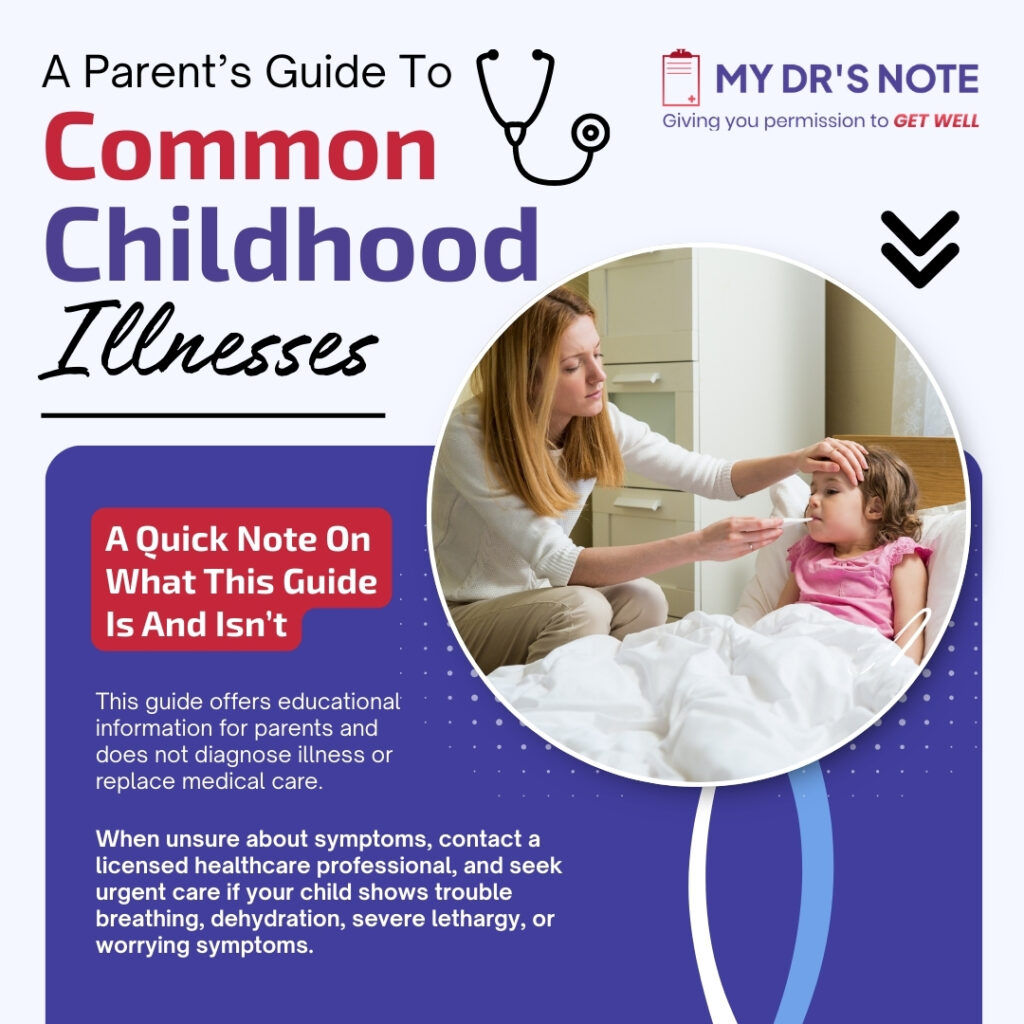
a woman with her child in bed.

How to Spot Strep Throat vs. a Regular Sore Throat in Children

A sore throat is one of the most common reasons children miss school. Sometimes it’s a mild irritation caused by a cold, and other times it’s strep throat—a bacterial infection that needs medical confirmation. Knowing how to tell the difference can help parents respond appropriately, avoid unnecessary worry, and understand when documentation may be required

How to Spot Strep Throat vs. a Regular Sore Throat in Children Read More »

Infographic on bone and joint injuries, highlighting their connection to daily life and the importance of rest, evaluation, and documentation.

Everyday Bone & Joint Injuries: When Rest, Evaluation, and Documentation Matter

Everyday movement puts strain on the body. Walking, lifting, typing, exercising, and even sitting for long hours can lead to injury without a big moment of impact. A bone and joint injury does not always involve a cast, crutches, or an emergency room visit. Many people keep going through pain, assuming it will fade on its

Everyday Bone & Joint Injuries: When Rest, Evaluation, and Documentation Matter Read More »

This photo shows a walking person wearing an ankle-foot orthosis device.

Hairline Fractures and Small Breaks: Why They Still Require Medical Attention

A hairline fracture may appear minor, yet underlying bone stress deserves careful attention. These small cracks often develop silently, progressing without dramatic symptoms or visible swelling. Daily movement can worsen damage when early warning signs remain ignored. A clear understanding helps protect recovery, continuity of work, and academic responsibilities. Awareness also supports the documentation of appropriate absences

Hairline Fractures and Small Breaks: Why They Still Require Medical Attention Read More »

This image shows a doctor writing a medical note.

Joint Swelling after Impact: What It Means and When to See a Doctor

Joint swelling after injury is a common concern after a fall, bump, or sudden impact at work or during daily activities. While many cases are mild and resolve on their own, swelling can sometimes linger, restrict movement, or interfere with job responsibilities. Understanding why joints swell, what symptoms are normal, and when swelling becomes a problem

Joint Swelling after Impact: What It Means and When to See a Doctor Read More »

A woman suffering from musculoskeletal pain

Your Bones Under Stress: How Minor Musculoskeletal Problems Affect Daily Function

We often think of bone and joint health as something that only becomes a concern in our senior years. However, the reality is that musculoskeletal issues can strike at any age. Whether it is a dull ache in your lower back from sitting at a desk or a sharp twinge in your wrist from repetitive

Your Bones Under Stress: How Minor Musculoskeletal Problems Affect Daily Function Read More »

a person writing a note

Temporary Joint Stiffness That Affects Daily Tasks

Waking up with stiff knees, struggling to grip a coffee mug, or feeling tightness when standing after sitting for too long are experiences many people in the United States share. Temporary joint stiffness is common and often alarming, especially when it interferes with everyday tasks. While stiffness can raise concerns about serious joint problems, it is

Temporary Joint Stiffness That Affects Daily Tasks Read More »